
It’s the little things in life that we adore as we get older. These last few weeks have been both joyful and trying. It’s joyful because when we get to do something wonderful for seniors in their residences, especially those in memory care. I love that feeling! And it’s trying, because we start to feel a little older when we see these folks that we identify with when we can’t complete all the tasks that we want to do. Each day we start to worry about slowing down a little more and that we will need more care as we age. Having said this, though I would like to brag about our choir.
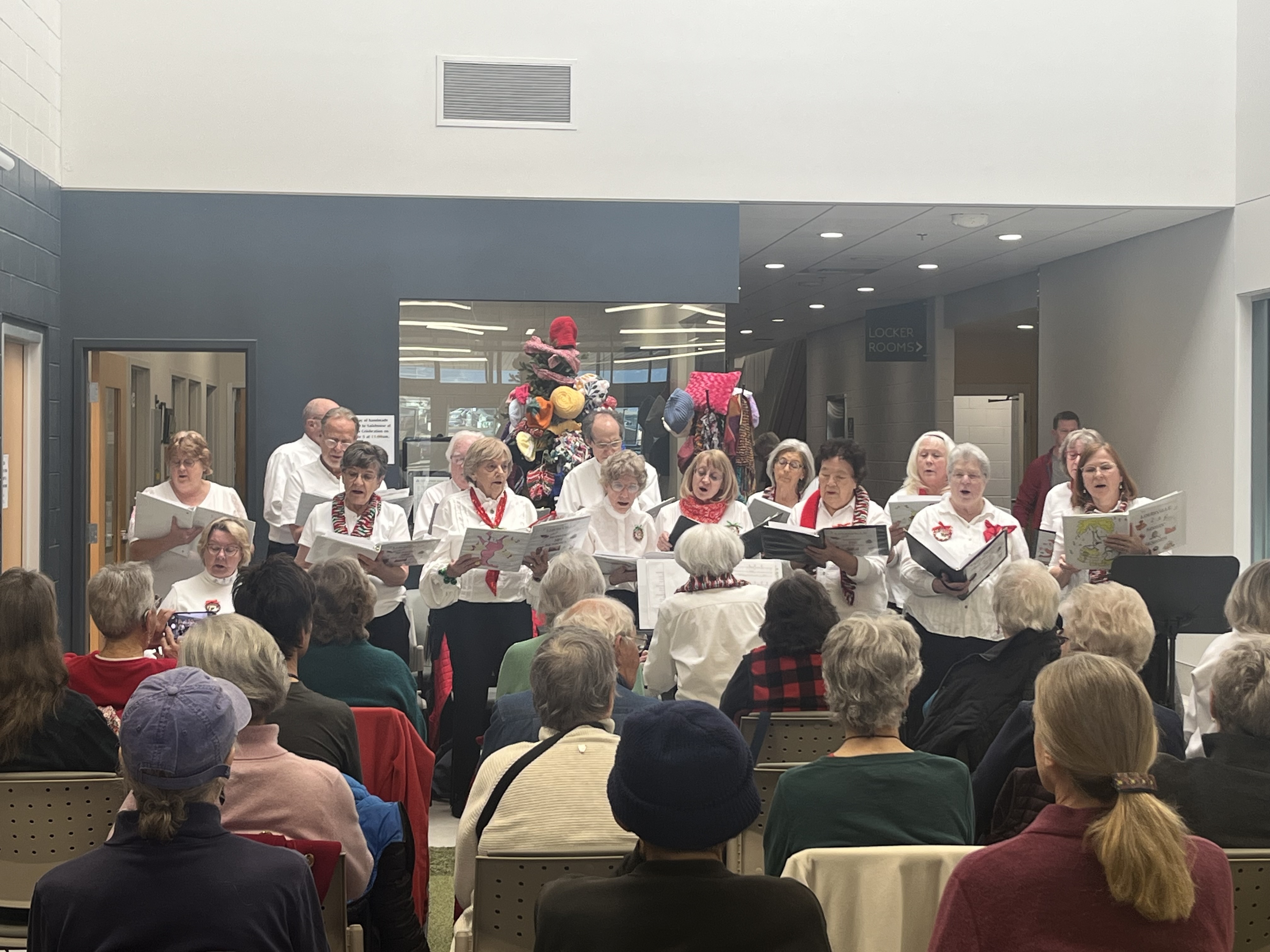
Our incredible senior choir comes together every Friday to practice a set of music where we go out and sing to those places that need a little cheer, especially this time of year. We belt out those oldies to bring a little Christmas cheer to those who are in facilities far from their homes and loved ones. We visit when they need us on all the holidays, but the Christmas melodies seem to have a profound impact on them. Those that can stand up and dance along with us during our performances. Those that can’t sing along and remember the times of their childhood. For a little time in our lives, we are appreciated, and they get something in return.
How does music make you remember? Our brains are an amazing thing. Studies have shown that music activates the limbic system, which controls memory and processes emotions. It also activates the hippocampus, which is associated with memory, and the amygdala, which is associated with emotional responses. It increases the blood flow to the brain regions that control emotions and releases dopamine, the natural happy drug! Music is often present during distinctive, emotional, or self-defining life events, which can make those memories easier to recall. Music therapy can be a valuable tool for helping dementia patients recall memories.
“Deeply encoded music can also unlock flashbulb memories. We remember more vivid details about events in the past when we are exposed to music,” Andrew Budson, Ph.D., told the Washington Post in an article posted on June 13, 2023. He added that research has shown that effect is more common with music than with familiar faces or other stimuli. Budson is a professor of neurology at Boston University, and chief of cognitive and behavioral neurology for the Center for Translational Cognitive Neuroscience at Veterans Affairs Boston Healthcare System.
British neurologist Oliver Sacks (author of Awakenings) once stated: “Music evokes emotion, and emotion can bring with it memory… it brings back the feeling of life when nothing else can.” This quote shows the power of music. Like the aroma of cookies baking, a familiar song can bring us back to another time. In 1973, Robert DeNiro and Robin Williams starred in the movie adaptation, and Penny Marshall directed the movie which was Sacks memoir. It is a fantastic movie, and I encourage you to find it at watch it during the holidays.
For more information on how music can help you and all others you sing to see the following articles:
https://www.health.harvard.edu/mind-and-mood/music-can-boost-memory-and-mood
https://www.pennmedicine.org/news/news-blog/2019/july/dancin-to-the-music-more-than-just-exercise
I want to shout out a huge thank you to our choir director, Connie Howes, who let me join this happy and talented group. I may sing a little off key sometimes, and sway and wiggle like that funny FB post lady (who is doing her thing in her choir), but I am delighted to be a part of these amazing folks! Happy Happy everyone! Enjoy the bliss during these next few weeks!
 Dru Tieben's Writing Corner