Moving On – Take it Easy

How many times have I heard these two idioms in my lifetime? When something is so difficult to fathom, how are these helpful statements?

It’s true that individuals must let go of past experiences to move forward. Dealing with emotions that bring us down helps us get a sense of clarity and purpose for our future selves. And yet, so many of us have held onto the grudges from the past. It doesn’t serve us when those in power hold onto these feelings and try to change the perspective of everyone around them. This me-centric personality is not a good fit for the highest office in the land.

But you know that’s not the only thing that I am here to talk about tonight. I was pondering how our future voters are doing in their government/civics and history classes in school? Are they learning what governmental entities should be doing? Are they learning what democracy is all about so when it becomes their time to vote in the next presidential election, we won’t have this fiasco once again?

Reporters in a 2023 article in USA Today, stated that the “2022 National Assessment of Educational Progress (often called “The Nation’s Report Card”) showed that only 22% of eighth graders are proficient in civics and 13% in U.S. history.  These scores have been declining – and we will pay the price if we don’t turn around those scores.”

This article further stated that “There is nothing partisan about being a good citizen. Understanding our history and the fundamental principles of our country and government are as fundamental and learnable as our ABCs − if we follow sound principles, and take history and civics seriously as a nation….That means quality history education for all − anchored in well-researched and verifiable truths about our nation’s unique founding and contributions to the world, our high ideals and core civic principles, the promises we’ve struggled to fulfill, and the diverse voices and experiences that have shaped our history.”

How has this gotten past the fundamental knowledge kids need to know about history and government? Why haven’t we provided teachers the support to create “critical thinking skills” to shape early minds so they don’t turn out like the crazed forces who put this person in office? What happened to teaching students how to “…evaluate evidence, consider different perspectives, and to discuss and debate historical events and controversial topics − respectfully and in a balanced manner. They should be taught the awesome responsibilities of citizenship, and the equally awesome powers of civic engagement and community involvement.”
Kid’s Education in Civics and History

Why did the parents of this last generation lose interest and a priority to teach basic understanding of their government, its history, and how it works to their children and themselves? An article on the Big Think website explained that “When political know-how is low among a populace, misinformation spreads easily, and citizens don’t have the confidence to engage with the system.” Author and professor of Political Science, Lindsey Cormack, asked this question among many others and has authored an amazing book called How to Raise a Citizen which came out in 2024. She stated: “I don’t know anything that gets better by people not being willing to talk about it,” Cormack says.

The article further states that “Civics is often taught as a checklist of must-memorize facts that don’t build into valuable skills. The short time frame is partly to blame, but so is a social climate that makes teachers and districts fearful that going beyond the “most anodyne” of trivia risks a social media firestorm.”

“The result? “It turns kids into spectators of history rather than participants,” Cormack says. For more information on this subject see the website:
Explaining How Government Works

We have to allow teachers to teach these subjects without fear of repercussions. We have to teach our children to delve deeper into topics that are controversial and are now being controlled by social media.

“Democracy dies in silence, and…parents need to do this job because no one else will….Follow her [Cormack’s] advice and maybe inspire them for life. Our national conversation starts with you.”—David Daily from How to Raise a Citizen.

We can’t “take it easy” about fascism and its grip on our society and people. We have to be vigilant and learn what government should be about. We have to get our country back to a state of peaceful cohabitation with the rest of the world. Sure, it’s easy for those in power to tell us to “Move on,” but we can’t move on to a government that shouldn’t be ours. We have to return to what is right and lawful and make our peace with the world leaders who are kind and just. We cannot let oligarchs take over. Their actions are despicable and self-centered and people are hurting everywhere, even those who bought into the whole world of that guy in office. They truly drank the Kool Aid (Look it up!). They are suddenly realizing that all of these events to defeat democracy are affecting them as well as the people they hate.

So, no, I’m not ready to give up the fight and move on. I will continue the fight locally and have my say. I can’t take it easy until lawful and peaceful movements take precedence. It is good to see people attending meetings and asking good questions. But Democrats have to stop being frustrated with the people they elected. They are doing the best they can. They don’t have a majority and so many illegal things are happening right now in our government. Now is the time to keep the conversations going. Now is the time to keep asking questions. Everyone has to reach out to the neighbors (Republicans) and explain to them what they have done. We have to all come together and understand what is going on. We must make the world a better place.

Something to think about and hopefully, react to, in these next few years. Keep reading, keep writing, keep asking good questions.

Reach out to all those in need and help them in any way you can in your little hometowns. I love you all tonight and stay safe out there.
How Did You Get This Way?

Weren’t you loved enough when you were little? I am referring to the outrageous acts of shameful behavior (to get attention) that are going on with some of our billionaires (you know who I am talking about) and that guy in office. I would love to send these two lists to their mothers and fathers and ask them “Why?” And “What happened to their parenting of these children that made them behave this way as adults?” And why are 25% of the population still enamored with these folks? Why are people giving them the attention and worship that they do NOT deserve?

Maybe the parents of these disgruntled yet very loud people should look back into history and learn from the best. I can start them out! Here are 25 of history’s greatest moms (taken from the website):

Mental Floss

  1. Marie Curie
  2. Sojourner Truth
  3. Abigail Adams
  4. Irena Sendler
  5. Kathy Headlee
  6. Frances Ellen Watkins Harper
  7. Hoelun
  8. Candy Lightner
  9. Waris Dirie
  10. Indira Gandhi
  11. Anne-Marie Slaughter
  12. Madam C.J. Walker
  13. 13. Dana Suskind
  14. Nancy Edison
  15. Julie Andrews
  16. Lou Xiaoying
  17. Princess Diana
  18. Erma Bombeck
  19. Theresa Kachindamoto
  20. Angelina Jolie
  21. Mary Kay Ash
  22. Mary Maxwell Gates
  23. Alberta King
  24. Wilma Mankiller
  25. Ann Jarvis

And interestingly enough there were only 10 dads listed In history that I could find in this website:

Listverse
1.         William Jackson Smart
2.         J.R.R. Tolkien
3.         Eddie Koiki Mabo
4.         Amasa Coleman Lee
5.         John Holter
6.         Chiune “Sempo” Sugihara
7.         Frederick Kohner
8.         Joseph Friedman
9.         Candido Jacuzzi
10.       Amilcare Anguissola

A Forbes Magazine article quoted two authors regarding why the rich are different:
The author F. Scott Fitzgerald is credited with saying: “The rich are different from you and me.” And Ernest Hemingway is supposed to have responded: “Yes, they have more money.” In fact, the actual words Fitzgerald used in his short story “The Rich Boy” (1926) are: “Let me tell you about the very rich. They are different from you and me. They possess and enjoy [it] early, and it does something to them, makes them soft, where we are hard, cynical where we are trustful, in a way that, unless you were born rich, it is very difficult to understand.” Forbes Study

While I don’t agree with all of the study’s test results, overall, I think there is some validity to look into this kind of research further and include data from the recent behaviors of those billionaires who are making the most noise (in the negative of ways). I think we little people should ask why they are throwing huge tantrums in public and not helping fix the problems instead of making more problems with their drama and actions. They don’t deserve the attention they are getting and if they were in my school, they would probably have been asked to sit in the corner for a while and think about their outbursts (or getting a swat on their bottoms (back in my day).

When we were kids, we learned to share and share alike, because none of us had a lot to give. It seems that some of the poorest people are the kindest people and give what they can no matter how small. For the most part, they nurture their children and care more about their neighbors. But, it isn’t just a small-town thing, or a poor people thing. It’s about all parents caring and teaching their children how to behave. It’s about parents and teachers nurturing them when they were young, and showing them how to give meaningfully to others, especially when they inherit ALL their wealth. It’s about believing in a polite democratic society that helps everyone, not just perpetuate the 2%.

I always find it interesting that the ex-wives, like MacKenzie Scott, give away their wealth. Sure, it doesn’t necessarily sustain the organizations long-term, but it is a huge gift either way. Why doesn’t her ex-husband do the same? He seems to just give it away to his wealthy friends for political reasons.

You don’t have to give it all away but giving is a noble endeavor, no matter how much you give. Hopefully, it also humbles you into understanding the underdog and why we must always help them.

As we head towards a revolution because of this disparity of wealth, we still worship the super-rich. I cannot hold all this in my head. There is a really spot-on article about this from last December in Psychology Today and I encourage you to read and discuss it for some answers you are seeking: Why Do We Hero-Worship Billionaires

So, yeah, probably a little bit preachy tonight, but I ponder these things to help others move their thoughts along. I love you all and hope you can give your hearts over to doing the right thing every day that you live on this planet!

What Liberal Means

I’m Sharing It!!! WOW!!! Thank you Ron Howard.

Ron Howard has summed up what many of us believe. Including me….

“I’m a liberal, but that doesn’t mean what a lot of you apparently think it does. Let’s break it down, shall we? Because quite frankly, I’m getting a little tired of being told what I believe and what I stand for. Spoiler alert: not every liberal is the same, though the majority of liberals I know think along roughly these same lines:

1. I believe a country should take care of its weakest members. A country cannot call itself civilized when its children, disabled, sick, and elderly are neglected. PERIOD.

2. I believe healthcare is a right, not a privilege. Somehow that’s interpreted as “I believe Obamacare is the end-all, be-all.” This is not the case. I’m fully aware that the ACA has problems, that a national healthcare system would require everyone to chip in, and that it’s impossible to create one that is devoid of flaws, but I have yet to hear an argument against it that makes “let people die because they can’t afford healthcare” a better alternative. I believe healthcare should be far cheaper than it is, and that everyone should have access to it. And no, I’m not opposed to paying higher taxes in the name of making that happen.

3. I believe education should be affordable. It doesn’t necessarily have to be free (though it works in other countries so I’m mystified as to why it can’t work in the US), but at the end of the day, there is no excuse for students graduating college saddled with five- or six-figure debt.

4. I don’t believe your money should be taken from you and given to people who don’t want to work. I have literally never encountered anyone who believes this. Ever. I just have a massive moral problem with a society where a handful of people can possess the majority of the wealth while there are people literally starving to death, freezing to death, or dying because they can’t afford to go to the doctor. Fair wages, lower housing costs, universal healthcare, affordable education, and the wealthy actually paying their share would go a long way toward alleviating this. Somehow believing that makes me a communist.

5. I don’t throw around “I’m willing to pay higher taxes” lightly. If I’m suggesting something that involves paying more, well, it’s because I’m fine with paying my share as long as it’s actually going to something besides lining corporate pockets or bombing other countries while Americans die without healthcare.

6. I believe companies should be required to pay their employees a decent, livable wage. Somehow this is always interpreted as me wanting burger flippers to be able to afford a penthouse apartment and a Mercedes. What it actually means is that no one should have to work three full-time jobs just to keep their head above water. Restaurant servers should not have to rely on tips, multibillion-dollar companies should not have employees on food stamps, workers shouldn’t have to work themselves into the ground just to barely make ends meet, and minimum wage should be enough for someone to work 40 hours and live.

7. I am not anti-Christian. I have no desire to stop Christians from being Christians, to close churches, to ban the Bible, to forbid prayer in school, etc. (BTW, prayer in school is NOT illegal; *compulsory* prayer in school is – and should be – illegal). All I ask is that Christians recognize *my* right to live according to *my* beliefs. When I get pissed off that a politician is trying to legislate Scripture into law, I’m not “offended by Christianity” — I’m offended that you’re trying to force me to live by your religion’s rules. You know how you get really upset at the thought of Muslims imposing Sharia law on you? That’s how I feel about Christians trying to impose biblical law on me. Be a Christian. Do your thing. Just don’t force it on me or mine.

8. I don’t believe LGBT people should have more rights than you. I just believe they should have the *same* rights as you.

9. I don’t believe illegal immigrants should come to America and have the world at their feet, especially since THIS ISN’T WHAT THEY DO (spoiler: undocumented immigrants are ineligible for all those programs they’re supposed to be abusing, and if they’re “stealing” your job it’s because your employer is hiring illegally). I believe there are far more humane ways to handle undocumented immigration than our current practices (i.e., detaining children, splitting up families, ending DACA, etc).

10. I don’t believe the government should regulate everything, but since greed is such a driving force in our country, we NEED regulations to prevent cut corners, environmental destruction, tainted food/water, unsafe materials in consumable goods or medical equipment, etc. It’s not that I want the government’s hands in everything — I just don’t trust people trying to make money to ensure that their products/practices/etc. are actually SAFE. Is the government devoid of shadiness? Of course not. But with those regulations in place, consumers have recourse if they’re harmed and companies are liable for medical bills, environmental cleanup, etc. Just kind of seems like common sense when the alternative to government regulation is letting companies bring their bottom line into the equation.

11. I believe our current administration is fascist. Not because I dislike them or because I can’t get over an election, but because I’ve spent too many years reading and learning about the Third Reich to miss the similarities. Not because any administration I dislike must be Nazis, but because things are actually mirroring authoritarian and fascist regimes of the past.

12. I believe the systemic racism and misogyny in our society is much worse than many people think, and desperately needs to be addressed. Which means those with privilege — white, straight, male, economic, etc. — need to start listening, even if you don’t like what you’re hearing, so we can start dismantling everything that’s causing people to be marginalized.

13. I am not interested in coming after your blessed guns, nor is anyone serving in government. What I am interested in is the enforcement of present laws and enacting new, common sense gun regulations. Got another opinion? Put it on your page, not mine.

14. I believe in so-called political correctness. I prefer to think it’s social politeness. If I call you Chuck and you say you prefer to be called Charles I’ll call you Charles. It’s the polite thing to do. Not because everyone is a delicate snowflake, but because as Maya Angelou put it, when we know better, we do better. When someone tells you that a term or phrase is more accurate/less hurtful than the one you’re using, you now know better. So why not do better? How does it hurt you to NOT hurt another person?

15. I believe in funding sustainable energy, including offering education to people currently working in coal or oil so they can change jobs. There are too many sustainable options available for us to continue with coal and oil. Sorry, billionaires. Maybe try investing in something else.

16. I believe that women should not be treated as a separate class of human. They should be paid the same as men who do the same work, should have the same rights as men and should be free from abuse. Why on earth shouldn’t they be?

I think that about covers it. Bottom line is that I’m a liberal because I think we should take care of each other. That doesn’t mean you should work 80 hours a week so your lazy neighbor can get all your money. It just means I don’t believe there is any scenario in which preventable suffering is an acceptable outcome as long as money is saved.”

Ron Howard

Chances and Democracy

“Today You’ve been Gifted with Another Chance. And: “Only dreams give birth to change.”—Sarah Ban Breathnach, Simple Abundance

The main idea of this idiom is to be open-minded and optimistic about something. It means to try something new or different, or to be patient and wait for something to improve or change. To allow someone another opportunity to do something or to prove their ability or worth.

I just want to give you the definition one more time in case you forgot:
Democracy: literally, rule by the people. The term is derived from the Greek dēmokratia, which was coined from dēmos (“people”) and kratos (“rule”) in the middle of the 5th century bce to denote the political systems then existing in some Greek city-states, notably, Athens.

In brief, the theory that democracy is the rule of the people and that the people have a right to rule. One study identified 2,234 adjectives used to describe democracy in the English language. Democratic principles are reflected in all eligible citizens being equal before the and having equal access to legislative processes. (No yeah, buts, here….)

The notion of democracy has evolved considerably over time. Throughout history, one can find evidence of direct democracy, in which communities make decisions through popular assembly. Today, the dominant form of democracy is representative democracy, where citizens elect government officials to govern on their behalf such as in a parliamentary or presidential democracy. In the common variant of liberal democracy, the powers of the majority are exercised within the framework of a representative democracy, but a constitution and supreme court limit the majority and protect the minority—usually through securing the enjoyment by all of certain individual rights, such as freedom of speech or freedom of association.—Wikipedia

We have a real chance to use our gifts and create trust in one another again. If we just reach out and dream the dreams of our childhood:

  • “Peace in your mind, peace on earth, peace at work, peace at home, peace in the world.” ~ John Lennon
  • “We cannot have peace on Earth until we learn to speak with one voice. That voice must be the voice of reason, the voice of compassion, the voice of love. It is the voice of divinity within us.” ~ Neale Donald Walsch
  • “Nothing that I can do or say will change the structure of the universe. But maybe, by raising my voice, I can help the greatest of all causes — good will among men and peace on earth.” ~ Albert Einstein
    For more enlightening and inspiring peace quotes go to: https://www.azquotes.com/quotes/topics/peace-on-earth.html

We can all make changes if we tell ourselves we are important enough to say the things we need to say. For example, I supported the workers and didn’t cross the picket lines at King Soopers. And I am writing my congressman and senators to be BRAVE and be the Democrat representatives they are supposed to be. So not all people like what I have to say, but at least I feel that as of this moment many of us are trying to make a stand and be on the right side of justice. There will always be controversy and mistrust if we don’t try to help each other, and ignoring the problem won’t help anyone. Let’s fight for the truth every day.

I love you all and hope you are continuing to learn something new every day. Dispel misinformation and pass on the News of the World like Tom Hanks to those in isolation who need to know what is happening out there. Pass on the news one positive statement at a time.

We Are All Immigrants

After a stressful conversation today I wanted to clarify something in hopes that the person I spoke with understands why what she said to me made me unhappy. She didn’t like where my conversation was going when I argued with my friend. (We are friends but have differing opinions about things and can sometimes get a little loud. We will probably never agree about some things, but we continue to talk about it.) So, she kept sighing really loudly and interrupted our conversation because she didn’t like what I had to say. I am sad that something bad happened to one of her family members and I told her I was sorry for her loss. Unfortunately, she blames immigrants for all of her sadness on this subject, and blames them for all of our woes in this country. She thinks (her words, not mine) “they are all criminals” and should be “sent back.”

I am saddened that she has no place in her heart to understand that not every person that has been labeled  in a demeaning way as an immigrant is a bad person. After all, unless we are the indigenous people of North America, we ALL came from somewhere else, albeit mostly Europe, but other countries as well. And we as original transplants weren’t all white people. There are many colors of people who came here with hopes and dreams of a society that accepts them for what they are: hard workers who want a safe place to live. We should embrace that all people should be welcome here. It’s the fearmongering people in office who keep stirring it up that the current immigrants are all bad people and so many of us believe this lie.

Immigrants often get a bad reputation due to a combination of factors including negative stereotypes, fear of economic competition, cultural anxieties, political rhetoric, and the use of inflammatory language. Fearmongers continue to paint immigrants as a threat to national identity, jobs, and social cohesion, even when these perceptions are not based on reality. Let’s break that down a little. Here are some key reasons why immigrants might be negatively perceived:
Cultural anxieties: Differences in language, customs, and religion can lead to concerns about cultural assimilation and a perceived loss of national identity, especially when immigration waves are large or from diverse backgrounds. 

Political rhetoric: Politicians often use anti-immigrant rhetoric to mobilize certain voter bases, which can contribute to negative perceptions of immigrants. 

Media portrayal: Certain media outlets might focus on negative stories related to immigration, further reinforcing negative stereotypes. 

Labeling and terminology: Using terms like “illegal immigrant” or “alien” can dehumanize individuals and contribute to negative perceptions. 

Historical prejudices: Past waves of immigration have sometimes been associated with social problems, leading to lingering negative associations with certain immigrant groups. 

I know some of you don’t want to hear it but I will continue to point out inaccuracies about what you say in public. I hope that I will help you realize that not all immigrants are the same. They come from diverse cultures and backgrounds, and just like us, they have different skills and motivations. They want a good life for them and their families in their countries, but cannot get it because of government corruption or other factors that harm them. I will continue to point out the positive impact of immigration. Research has shown that immigrants can contribute significantly to the economy by starting businesses, filling labor shortages, and boosting innovation. I will continue to combat negative stereotypes by promoting accurate information to you, even when you have closed your mind to possibilities. The best way to combat fear and prejudice and challenge harmful stereotypes of these folks, is to not only promote accurate information, but highlight positive immigrant stories, and use inclusive language when talking to each other. I hope you can overcome your fears and stop condemning an entire group of people who are not so different than you.

And that’s the story for today. I still love you all and feel your pain, but this fear must stop. We cannot continue to pass on misinformation among ourselves. We have to take charge and do what we can, one person, and one day at a time. We have to care about each other once again, no matter what we hear from others. I’ll do my best to help everyone. Can you say the same thing?

It Takes a Village

The phrase “it takes a village to raise a child” is believed to be an African proverb (although there is no hard evidence to the fact). This thought conveys the idea that a community is needed to provide a safe and healthy environment for children. It means that many people, or a “village,” are needed to help children grow and develop, and to realize their potential. This became a popular movement in the 1992-2000 under the Clinton administration as well as once again in 2008-2016 during the Obama administration. Both Hillary Clinton and Michelle Obama embraced this idea and took it to great heights, creating programs and many opportunities that helped families and especially the children of those families.

But what I like about this proverb is how it has expanded into other meanings over the last two decades. There is now an essential idea that the village supports the people who live there, creating a like-minded community. Each community has its own life force, some through community or recreation and senior centers, some through town halls, and some through various churches. People can create change through their communities if they work together. Through their collective responsibility, they can share the enormous undertakings in cities as a team. They create the place they want to live and thrive when they create a peaceful environment. You heard the old adage: Teamwork Makes the Dreamwork. Our community believes this and tries to help change the things that need changing (well, with a minimum of complaining, which is okay, too).

I truly believe that no one is meant to do life alone. My village of friends has expanded over the years. For me it’s a lot of the folks at our Recreation and Senior Center through the programs I am currently involved in. For a long time I was adrift. I have other friends, but now I think I have found my new people. They offer me guidance, practical help, and sometimes just a safe place to share my thoughts and feelings.

For more information I encourage you to read and process these great books:
Hillary Rodham Clinton’s book: It Takes a Village
Michelle Obama’s book: Becoming and workbook Overcoming

So, be aware that we need you in 2025 to help us all get through what life will throw at us!
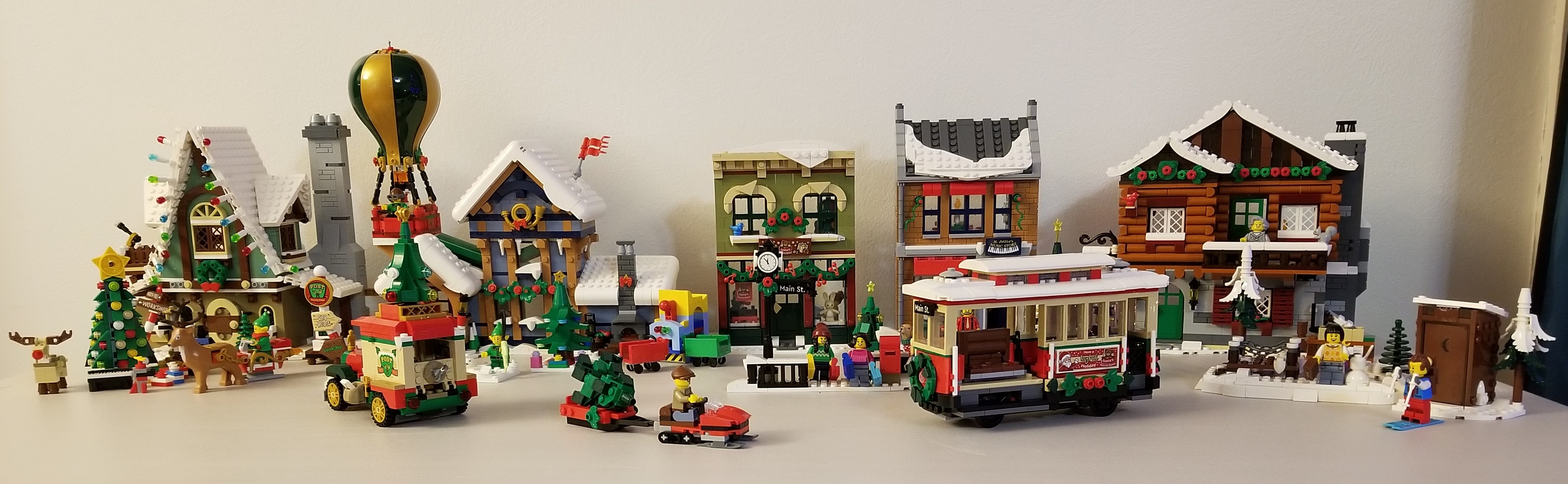
And recognize that it does take a village so thanks for being part of ours (even if it’s building Legos together to create the ideal village)! I love you all and I send you a big kiss. Happy Holidays!

LIFE IS AN EDUCATION-Reflections from School in the 1960s-Civilization as it Stands-Part IV


Continuing from yesterday’s post:
What does this discourse in primary years of education say about our civilization and technological advancement? As society continues to change and grow, the individual must change and grow at the same rate. Some people change along with it. Some stay the same. We all want to continue to learn innovative ideas, but we are continuing to use old methods. We cannot get stuck in the past and forget our dreams, and our creative process based on our history. We must learn to accept our failures and get unstuck. If we continue to believe we cannot change, we will not change. We will stop learning new things. We will stay in jobs that are mentally unproductive. We will stop enjoying our lives. We will stop learning something new. We will begin to believe that this mundaneness is all there is to life.

If we continue to let only one percent of the world’s population make all our personal decisions, we will lose our courage to uproot negative feelings about ourselves and others. We will not believe in ourselves. We will refuse to believe that a single individual can make a change. If we can get beyond what our adolescent years taught us about learning new things, and dealing with new people, we can finally complete the growth process and become an adult and functioning human being. We won’t be as angry with ourselves – this anger which usually translates to anger at others and the world. We can finally learn to stop and take it one day, even one hour, at a time.

During the 1960s, we as a nation began discovering the individual and the individual in relation to the world that surrounded us. Some of us didn’t like what we saw and dropped out. We went to communes in hopes of achieving happiness. Some of us decided to become part of the political action scene. These were the ones who thought that working to elect new blood would change society. Some of us became activists, disliking the system and wanting to completely give up on society as it had become. To me, this is usually translated as blowing up s*#t, thus harming innocents in the process. Some of us still believed in the system enough to try and make changes by working for the government. Others simply rode the storm out. The influence of the Vietnam War permeated the sixties’ and early seventies movement. We blamed everyone except ourselves, including those young soldiers that came home from the war. Many of those young people came home to a disenchanted world and their psyches never recovered. They weren’t heroes to the very loud protestors. They were baby killers. That still makes me so sad to think we had abandoned them in a time when they needed us the most.

During the late 1960s, author Edward Abbey authored a book called Desert Solitaire. He was a great outdoors person and had strong beliefs in keeping the great open spaces pristine and undeveloped. Throughout my final high school year, I wanted more out of my personal reading. In making a discovery of his works, (and once again in the 1990s) I began to transform my thoughts about the world and how I wanted to fit in. His words made a meaningful change in my thinking during that time. I realized that I was only a tiny part of the vastness of his world. I was an insignificant speck. I would later discover how self-absorbed the society was becoming. In this same book, Abbey stated that he wasn’t “…opposed to humankind but only to man-centeredness, anthropocentricity, the opinion that the world exists solely for the sake of man…. He also stated that he was not opposed “…to science…but to science misapplied, to the worship of technique and technology….”  Finally, he stated that he was not opposed “…to civilization, but to culture….” (p. 305-306).

It was our culture that swept us into Vietnam. It wasn’t for mutual aid and our defense of our civilization. Rather, it was a judgment made by the men in power regarding the threat of the illusive communistic takeover. It was like any other war – a fight for monetary benefit. So, I personally couldn’t condemn the young people who were drafted into a non-war. I did condemn many of the political decisions made (such as the draft) to force those young men into a war zone. And I condemned those who spat on these same soldiers when they returned. A lot of my generation was too young to participate in the war or protests to the war. We could only observe what was going on through the mass media, so our reactions were detached from those who were already engaged in these actions. I would rediscover Abbey’s works in 1999 and would begin another attempt to live the life that I desired – a life that he had inspired me with his works.

In my college years, I began to realize that I wanted more. I wanted to make an impact. I wanted to make positive change in the world that I lived in. I didn’t want to be one of those who dropped out. As I began to realize that I did, indeed, have a place in the Universe, I wanted to save all the beautiful places and live there, whether it was in the mountains, or in the desert, or both. I thought that if I had enough knowledge, I could fight the system – the establishment. I knew that illegal actions were not the answer. I repeat: You can’t just blow s*#t up to solve the problem. It never does. I made a choice to fight within the system. But, as I began to learn, knowledge was not enough. Application was just as important.

Law enforcement was the career choice for me to create change, but there are so many other governmental entities that need an enlightened graduate. When it comes time for graduation, I hope the new generation will make a choice to work within the government walls, as hopeless as it seems right now to make changes from within. We must move forward and create a system of enlightened and integrated workforce that work ten times better than they were in the past.

Keep up the good work and thank you.

Remember today is the last day for the Colorado Gives Day campaign. I just gave donations to 5 different causes so please give what you can! Hugs to everyone and be at peace during this holiday season!

Note: Parts of this post were originally written for a graduate level class in the late 1990s. Some teaching methods have improved over the last two decades. I would love to hear teachers respond to this blog, how they help students learn, and what the new methods are to teach in an integrative learning environment. Thanks to all teachers who are dedicated to the craft in these trying times!

LIFE IS AN EDUCATION-Reflections from School in the 1960s-Part I

I think it’s important to expand a little more about my school years and the importance of community, the current events of the time, and of math and science. I grew up in a tumultuous time in this rural county in the south. My pre-college school years were from 1961-1972. It was a time of discovery and baby steps into space. It was a time of transformation from the man-centeredness or anthropocentricity (as Edward Abbey called it in his book, Desert Solitaire). Abbey was right when he advocated that the world did not exist solely for the sake of humankind. The two key events that expanded this opinion into depths we had never seen before were the race riots and space exploration. Our civilization was changing whether we liked it or not.

At first, my small rural community didn’t experience as much racial tension as was occurring in the larger schools such as Atlanta, Savannah, Macon, and in the bigger cities in the mid-west and up north. However, the general opinion among most adults and many of their children was zero tolerance for differing opinions among the races and the sexes. Most people in positions of power would have preferred that we remain as we had for the past two hundred years, since the inception of the colonial states.

Some of the earliest horrible memories of high school were listening to the male students in high school trying to impress me with their tales of chasing down Black men and hurting them. They followed their parents’ lead and would chase these Black students into the woods, in the middle of the night, and unceasingly beat them – sometimes beating them to death – with sticks and chains. We were afraid to speak up in case we got burned out. We saw it on the TV, the burning of churches and crosses.There were talks of hanging these same men in front of their families. Those were the memories that stick out of my early education years, and the people I grew up with.

I had vastly different opinions about who was a part of our community. I believed back then and still believe today that everyone should be treated equally and fairly. Thus, the few friends I had in elementary school dwindled to a minimum, since I didn’t believe in what they did.

My school was the only school in my small rural county. Since it was one school for the whole county, one simply moved up the hall to high school. There were two schools, one for people of color, and one for whites. We didn’t see complete integration until 1971, my junior year in high school.

I suppose I could say I was a crusader, an early civil rights activist, in the south for rights of all people – especially women, people of color and anyone who the southern white male felt was inferior to them. I wasn’t a physical demonstration-type of person, but I continued to write about it in my high school reports as well as to the local paper about what was going on in the world and how we should just Wake Up!

It’s hard to believe how far we still must go and how racism and women’s rights have vanished vigorously in these past few years. I have believed in women’s rights since my birth, but I didn’t like the harshness of the feminist movement. You cannot hate the entire male race for what they believe. Unfortunately, that’s the way they grew up and so many women bowed to that way of thinking. We made some changes, and now it seems to be reversing. I still believe that everyone must learn by doing. I felt that if you did an exceptionally excellent job, didn’t do inappropriate things with men to climb your way up the ladder and expect respect as a result (this was a popular at the time to get promotions through side benefits), that you could do anything. I did learn that from my naivete, I didn’t get as many promotions, but I tried to stay on the path and do the best job I could in the circumstances presented to us. I had to come home and respect me no matter what others said.

I always kept that idealistic belief of how the world should really be in my mind throughout all the struggling times. I continue to work towards that ideal today. We must get beyond that deep-seated prejudice that will rise up inside us when we are afraid. We are ready to unite in one cause to keep our loved ones safe, our fellow human beings alive, our environment clean, and reach for the stars.

We must help everyone, no matter their race or who they represent. We should unite in one cause to keep our loved ones safe, our environment clean, and reach for the stars.

To be continued tomorrow……

I love you all and want you to be happy! Hugs and Kisses!

WHAT WE VALUE AND THE STORIES BEHIND THEM

This is the time of year we think of our first memories of the holidays and reflect on what we learn. Alas, the walls of my memory divide the thorns from the roses, so I endeavor to think most about the good times or roses, and what lessons I learned to be the person I am today. Here are some thoughts on who I am. I encourage you to write about who you are and ask yourself: “Are you the person you want to be?”

I am the product of a southern belle princess and a country farmer. My parents grew up in the Deep South during the Depression and World War II. My father was in the navy and my mother worked in a department store. I am the middle kid. I am a Baby Boomer.

I was known as that weird kid because I didn’t fit into any mold of what a normal teenager was thought to be, those molds that others love to put themselves in. I grew up in an era where being smart, having coke bottle glasses, and being awkward and opinionated made me stick out like a sore thumb. In the Deep South, those were the very things that made ridicule come easily from my classmates.

My life was one of marching to the beat of a different drum and this lifestyle would get me into arguments with people of all ages. I would always fight the good fight, for what was just and right. Slowly, friends I had known since first grade systematically shut me out. We went our separate ways, and I never heard from most of them again.

As a young child, I began to question why people do the things they do. Why would they hold onto hate that was over a hundred years old? Why didn’t I feel the same way? I would ask myself, “Why couldn’t I just be that cute cheerleader who fits in?” You know what I’m talking about: the ones that fit the mold and went to all the cool parties; the one who was just part of the gang. Why did I have so many reasons to want to change the world? Why didn’t I just settle down and have a family like all the other girls? (OK, so maybe they were having kids at thirteen back then, so I said ‘No, thank you!’).” So, I kept telling myself, “I can make a difference in the world if I am given the chance.”

Finally, I did get that chance and many more when I became an adult. I chose the path to make a difference in the world, no matter how hard it was to obtain. I moved away to achieve the things I dreamed about. And I never looked back.

Even though I am now in the senior citizen category, I still categorize myself as that weird kid who thinks too much. I have been a southerner, and a country girl now turned city girl. I remember the Vietnam War and high school friends who never came back. I remember Iraq and Afghanistan wars and those who never came back. I remember so many firsts from my fellow police academy graduates. My classmates graduated to become some of the best and the first truly educated and understanding officers the state of Georgia had ever seen – the first African American state trooper in South Georgia, the first woman game and fish officer, the first women working as patrol officers for the Atlanta PD, and the first women correctional officers and trainers. I have been a correctional officer trainer, a police officer and behavioral profiler, and another first – creating the first serious juvenile offender program for the police in Colorado. We all broke down these barriers, women and people of color no longer designated to the secretarial or motor pool, back in the day when disco was hot, and cocaine flowed freely. I remember police friends who got so burned out they had to quit.

I went to college in both the 1970’s and again in the 1980’s. Some of my generation thought of ourselves as a lost generation because we were not the classic Boomer generation. We had different worldly causes than those of our mothers and fathers. Our generation wanted change, fairness, honesty, and hope. Today, I still get into a lot of animated and sometimes hostile discussions with people who are both younger and older and have differing opinions. I constantly remind myself that I need to try and respect their opinions even though I disagree with them. I want to have animated discourse but not the current hostility where no one listens to each other.

I am ashamed of the southern people that I see on television today that have so much hate in their hearts. I decided a long time ago that since I expect so much from myself it is okay to expect the best out of others, so I keep trying to make them understand love and kindness.

Today, half the people believe that our society cannot change for the better, even when I tell them that we control our own lives. There is still too much war in the world and less talk of peace and unconditional love. These were the visions of my bohemian hippie generation. I think there’s a need for people like me out there – one that still believes in those old ideals yet has a demanding work ethic to make change happen and make people believe in the future.

I’ve made my own way in the Wild, Wild West. I have fully participated in the world, I write and publish about things that matter, sometimes couched in fun mysteries, and believe I have made a difference. I’ve had my “fifteen minutes of fame” and am ready for the next fifteen. Are you ready? I wish you happy holidays and fulfillment in your lives.

Enjoy these puns based on songs while you spend time with your family. And try not to fight, just have a peaceful moment in time. Happy Thanksgiving!

Hit me baby one more thyme.

It’s all about that baste.

Give peas a chance.

All pie myself.

Talk turkey to me.

Did you hear about the Pilgrim band? They’re called “New Kids on the Rock.”

Turkey deeds done dirt cheap.

Creating a Local Utopia: Building Communities of Equality

The Merriam-Webster Dictionary defines Utopia as a place of ideal perfection especially in laws, government, and social conditions, and an impractical scheme for social improvement.

There’s quite literally no place like utopia. In 1516, English humanist Sir Thomas More published a book titled Utopia, which compared social and economic conditions in Europe with those of an ideal society on an imaginary island located off the coast of the Americas. More wanted to imply that the perfect conditions on his fictional island could never really exist, so he called it “Utopia,” a name he created by combining the Greek words ou (“not, no”) and topos (“place”). The earliest generic use of utopia was for an imaginary and indefinitely remote place. The current use of utopia, referring to an ideal place or society, was inspired by More’s description of Utopia’s perfection.

More’s use of the term “Utopia” was intended to show how people could live in peace and happiness if they did what he thought was right.

Utopias are often discussed as aspirational goals for society, and to criticize how current societies work. Utopian and utopianism are also terms used to describe visionary reform that is often impossibly idealistic. Perfection is impossible because everybody has different ideas in which they believe; a utopia would have to emerge from a combination of them all.

There is no society then or now where institutions and policies are entirely governed by reason. The order and dignity of such a state was intended to provide a notable contrast with the unreasonable polity of Christian Europe, divided by self-interest and greed for power and riches. Sound familiar?

As a person who believes that all people are equal and should have a place at the table, the current environment will not support this at the global level. I can only hope the world will evolve to embrace this thought of a society where we can all ignore the media and hatred in the coming years and keep a haven in the community where we currently live. If we can keep this in our hearts when dealing with others different from ourselves, society may evolve through our grassroots efforts. We must go beyond hate and start small.

This holiday let’s welcome one person to our dinner table for an opportunity to gain knowledge and experience from one other. Perhaps we can create a small utopia in our neighborhood. Thank you for continuing the conversation. I look forward to hearing from you.