When We Become Too Comfortable

Denver voters voted for Propositions LL and MM to fund healthy meals for all children in their schools. Those who opposed Proposition MM—the tax on incomes higher than $200,000.00—had incomes higher than $200,000.00! Wow! However, all the little people stood up and voted in favor of this measure. They know what’s important.

Georgia voters approved a measure to increase exemptions for seniors on school funding, which is expected to cause a deficit in the public school system. I understand that many seniors suffer, but those with more financial means should pay their fair share to help the younger generations. The “I got mine, the hell with the rest of the world” ideology has to stop now. We must become the person our ancestors wanted us to be.

As a senior, I understand that money can be tight, but I believe in paying my fair share of taxes to help fund public schools and care for future generations. And people with more means should also pay their fair share.  Without accessible education and healthy meal programs, we have doomed our future leaders and given power to the multi-billionaires. (Sound familiar?)

When we start to make money, and some of us have done very well, we forget how we got there. Our education was important and helped create healthy and successful people in most of us. Some of us entrepreneurs have amassed a significant amount of wealth over the years, and we’ve lost touch with the humble person who started out with less. I never made it into the $200,000.00 income crowd, but I shared what I had with those who needed it more than I did. I still do that today and have increased my sharing amounts.

So I am asking all of you to adjust your comfort zone. I am asking all of you to go beyond selfishness and consumerism. Consider taking one less vacation, not buying the latest and greatest iPhone, and save a little money to donate to a cause that helps your local schools and food banks. ALL children deserve an education, and teachers deserve to be treated with respect. That’s all I am asking of each of you. YOU made these children, and you also have neighbors who have children. Treat all of the children and families right, and they will honor you when they take over the world!

Colorado Gives Day is coming up on December 9th. Consider giving more than you did last year. Enough said.

I love you all on this windy, warm day. Hope for rain or snow!

Life Goes On

I took a few days to do all those things that needed doing in my life right now. Reflecting on the day-to-day stuff made me take a step back from the anger and madness that is out there. I decided to keep talking about how I can make a difference in the world right now and stop worrying about everything else. I decided to curb my rants for a few days and just enjoy the moment and stop and enjoy the sound of the birds and the bursting new growth outside today.

We can live our lives peacefully if we just try and help one person each day. We can speak our minds if we aren’t angry all the time. We can live a normal live if we can pause and just watch the parade of loons for a little while and not be loony ourselves. It will eventually come back to normal and maybe even get a little better. I still don’t agree with everything that is happening in our nation, but I can only do so much. If each state steps up to the plate and fund the things that need to be funded, maybe federal regulations and dollars won’t be needed in the future. That is quite a pipe dream, I know, but we have to have some perspective. I believe in funding education and environmental protection and can only hope that we don’t completely destroy either of them in our states. (Remember: Hayduke Lives!)

There will always be people like that guy in office who have no clue as to how the rest of the world lives. There will always be those old white guys (and girls) who don’t understand us. There will always be rich people who will never be satisfied with what they have. They want recognition at the expense of others. And they will end up looking all the more a fool as a result of it.

But there will always be people like you and me who care about people. There will always be people like you and me who have hope that they can make small waves that will grow into a tsunami of kindness and peace. There are good people out there making a difference no matter what the political world is creating for us. So, we can sit out the hate and nonsense for a little while longer as long as we are living and helping someone in need every day. I just went to the website and set up a small monthly donations online at https://www.coloradogives.org/
It helps me to help others and they help so many people and places through this website. There are so many organizations that need our support right now.

Here are some thoughts about why we must understand the value of education:
“The goal of education is the advancement of knowledge and the dissemination of truth.” —John F. Kennedy
“Education is our only political safety. Outside of this ark all is deluge.” —Horace Mann
“Education is for improving the lives of others and for leaving your community and world better than you found it.” —Marian Wright Edelman
https://www.weareteachers.com/quotes-about-education/#learning
https://www.weareteachers.com/quotes-about-education/#journal

Keep reading, keep learning, keep helping, and keep on keeping on! I love you all on this beautiful night!

Happy Pi Day!

I am bone dead tired today so I am cleaning up at home and baking. That is my go-to when my body hurts. I long for the days when I could hike all morning, come home, clean up, and then go about creating and cooking the rest of the day. Alas, the body calls for down time more and more these last few years. It’s how we cope with that loss of energy that leads us to our happy place. And sometimes we just need a nap!

And speaking of a happy place, Happy Pi Day! I didn’t think about this until my family talked about it.

According to Wikipedia, “The number π (spelled out as pi) is a mathematical constant, approximately equal to 3.14159…, that is the ratio of a circle‘s circumference to its diameter. It appears in many formulae across mathematics and physics, and some of these formulae are commonly used for defining π, to avoid relying on the definition of the length of a curve. For thousands of years, mathematicians have attempted to extend their understanding of π, sometimes by computing its value to a high degree of accuracy. Ancient civilizations, including the Egyptians and Babylonians, required fairly accurate approximations of π for practical computations…. The invention of calculus soon led to the calculation of hundreds of digits of π, enough for all practical scientific computations. Nevertheless, in the 20th and 21st centuries, mathematicians and computer scientists have pursued new approaches that, when combined with increasing computational power, extended the decimal representation of π to many trillions of digits.”

And… drum roll please! Here are a bazillion Pi jokes from the Pioneer Woman’s website. She is funny in her nerdy way!

  • What do you call it when someone gets a huge tattoo of pi on their face? An irrational decision.
  • Why should you never argue with pie? Because it always goes on and on!
  • How many bakers does it take to bake a pi? 3.14.
  • Why did pi get its driver’s license revoked? Because it didn’t know when to stop.
  • How many calories are in that slice of chocolate pie? 3.14.
  • What did pi say when someone asked if it could explain what Pi Day was again? “I don’t want to repeat myself.”
  • What’s wrong with the equation ‘pi r squared?’ Pi are round. Cake are square.
  • Why shouldn’t you eat too much pi? You’ll end up with a big circumference.
  • What was Sir Issac Newton’s favorite dessert? Apple pi.
  • If March 14 was really Pi Day, it would never end.
  • How did critics rate Life of Pi? 3.14 stars.
  • What do you get when you take a bovine and divide its circumference by its diameter? A cow pi.
  • What do you get when you divide the circumference of the sun by its diameter? Pi in the sky.
    What do you call a snake who knows math? A pi-thon!
  • How do you celebrate Pi Day at the beach? With a pi-na colada!
  • What did pi say to its partner? You look radian today.
  • Come to the nerd side. We have pi.
  • Who was the roundest knight at Sir Arthur’s table? Sir Cumference because he ate too much pi.
  • 3.14% of sailors are pi-rates.
  • What’s the ideal way to serve pi? A la mode! Anything less is mean.
  • Simple as 3.1415926…
  • What do you get when a bunch of sheep stand in a circle? Shepherd’s pi.
  • What is 1.57? Half a pi.
  • Can you recite pi? Peach, blueberry, pumpkin, pecan
  • Why was the math book sad on Pi Day? It had too many problems.
  • What did the math teacher have for dessert? Banana cream pi!
  • Don’t let advanced math intimidate you!… It’s as easy as pi!
  • What did the triangle say to the circle? You’re pointless.
  • Why couldn’t the angle get his dream apartment? Because his parents wouldn’t cosine.
  • Did you hear about the rancher who had 197 cows in his field? He decided he should round them up, and now he has 200.

https://www.thepioneerwoman.com/holidays-celebrations/a60177067/pi-day-jokes/

Also, find the sites where you can also get free pizza pies today with the symbol spelled out in pepperoni on top!

You could also bake a pie ( π ) to honor today (Okay I’m making blueberry muffins – not a good crust maker! But they’re still round, right?) I encourage you to heartily bake if you are good at it and enjoy it with your friends or family or both!

I love you all!

Becoming a Citizen

I am still reading this wonderful book called How to Raise a Citizen by Dr. Lindsey Cormack. Today I learned that we (Colorado) are one of the few states that demands a year-long civics course to graduate. Cormack stated that the Colorado Dept. of Education “…developed a set of vocabulary, skills, questions, and content for use in the classroom.”

Unfortunately, the old joke is that the teacher that is usually assigned to teach civics is named “Coach.” That is the person who has an off-season to teach the class. While some coaches are fantastic (I can name a few my son had in middle school and high school), others are just going through the rhetoric and teaching them how to take a test. There is no passion about this subject, and the students may pass the class, but never take it to heart on how to actually be a part of the political world. They may not understand the local political system and how to be involved in it. They may not know how to even register to vote (as evidence from the last election, students showed up at the polls and realizing they had not registered to vote so were turned away). This was disheartening to many young people, and that bad experience may influence their future participation. Some schools take up the mantle and work through the process, sometimes having the County registrars show up at the beginning of the year to the school.

The other service that is valuable in our community is the Youth Advisory Board. Students from grades 6-12 can participate in local government and learn about how the system works. I encourage parents to check this out and help their children become better citizens. Yes, sports are important, but this is life-changing knowledge that will help them navigate the political world, making their own decisions on how they want to be governed. For more information, go to the City of Louisville website and check it out!
https://www.louisvilleco.gov/local-government/government/boards-commissions/youth-advisory-board

I know it’s a hard thing for parents to navigate their child’s needs at the time they need them, but parents need to be more informed and have conversations with their children at an early age on how our government should work. Kids should start learning when they are young what Democracy means. Parents, we have to step up, learn something new, and then pass it on to our children and grandchildren. And grandparents, if you are stepping in as a caregiver, stop drinking the Kool-Aid. (Look it up!) Stop giving misinformation to your grandchildren. Let the parents work with the information necessary to teach their kids how to be proper citizens. They may not agree with your views. That is their prerogative. Enough said.

I love you all and still hoping you will join me in creating peace and changes to the world!

Moving On – Take it Easy

How many times have I heard these two idioms in my lifetime? When something is so difficult to fathom, how are these helpful statements?

It’s true that individuals must let go of past experiences to move forward. Dealing with emotions that bring us down helps us get a sense of clarity and purpose for our future selves. And yet, so many of us have held onto the grudges from the past. It doesn’t serve us when those in power hold onto these feelings and try to change the perspective of everyone around them. This me-centric personality is not a good fit for the highest office in the land.

But you know that’s not the only thing that I am here to talk about tonight. I was pondering how our future voters are doing in their government/civics and history classes in school? Are they learning what governmental entities should be doing? Are they learning what democracy is all about so when it becomes their time to vote in the next presidential election, we won’t have this fiasco once again?

Reporters in a 2023 article in USA Today, stated that the “2022 National Assessment of Educational Progress (often called “The Nation’s Report Card”) showed that only 22% of eighth graders are proficient in civics and 13% in U.S. history.  These scores have been declining – and we will pay the price if we don’t turn around those scores.”

This article further stated that “There is nothing partisan about being a good citizen. Understanding our history and the fundamental principles of our country and government are as fundamental and learnable as our ABCs − if we follow sound principles, and take history and civics seriously as a nation….That means quality history education for all − anchored in well-researched and verifiable truths about our nation’s unique founding and contributions to the world, our high ideals and core civic principles, the promises we’ve struggled to fulfill, and the diverse voices and experiences that have shaped our history.”

How has this gotten past the fundamental knowledge kids need to know about history and government? Why haven’t we provided teachers the support to create “critical thinking skills” to shape early minds so they don’t turn out like the crazed forces who put this person in office? What happened to teaching students how to “…evaluate evidence, consider different perspectives, and to discuss and debate historical events and controversial topics − respectfully and in a balanced manner. They should be taught the awesome responsibilities of citizenship, and the equally awesome powers of civic engagement and community involvement.”
Kid’s Education in Civics and History

Why did the parents of this last generation lose interest and a priority to teach basic understanding of their government, its history, and how it works to their children and themselves? An article on the Big Think website explained that “When political know-how is low among a populace, misinformation spreads easily, and citizens don’t have the confidence to engage with the system.” Author and professor of Political Science, Lindsey Cormack, asked this question among many others and has authored an amazing book called How to Raise a Citizen which came out in 2024. She stated: “I don’t know anything that gets better by people not being willing to talk about it,” Cormack says.

The article further states that “Civics is often taught as a checklist of must-memorize facts that don’t build into valuable skills. The short time frame is partly to blame, but so is a social climate that makes teachers and districts fearful that going beyond the “most anodyne” of trivia risks a social media firestorm.”

“The result? “It turns kids into spectators of history rather than participants,” Cormack says. For more information on this subject see the website:
Explaining How Government Works

We have to allow teachers to teach these subjects without fear of repercussions. We have to teach our children to delve deeper into topics that are controversial and are now being controlled by social media.

“Democracy dies in silence, and…parents need to do this job because no one else will….Follow her [Cormack’s] advice and maybe inspire them for life. Our national conversation starts with you.”—David Daily from How to Raise a Citizen.

We can’t “take it easy” about fascism and its grip on our society and people. We have to be vigilant and learn what government should be about. We have to get our country back to a state of peaceful cohabitation with the rest of the world. Sure, it’s easy for those in power to tell us to “Move on,” but we can’t move on to a government that shouldn’t be ours. We have to return to what is right and lawful and make our peace with the world leaders who are kind and just. We cannot let oligarchs take over. Their actions are despicable and self-centered and people are hurting everywhere, even those who bought into the whole world of that guy in office. They truly drank the Kool Aid (Look it up!). They are suddenly realizing that all of these events to defeat democracy are affecting them as well as the people they hate.

So, no, I’m not ready to give up the fight and move on. I will continue the fight locally and have my say. I can’t take it easy until lawful and peaceful movements take precedence. It is good to see people attending meetings and asking good questions. But Democrats have to stop being frustrated with the people they elected. They are doing the best they can. They don’t have a majority and so many illegal things are happening right now in our government. Now is the time to keep the conversations going. Now is the time to keep asking questions. Everyone has to reach out to the neighbors (Republicans) and explain to them what they have done. We have to all come together and understand what is going on. We must make the world a better place.

Something to think about and hopefully, react to, in these next few years. Keep reading, keep writing, keep asking good questions.

Reach out to all those in need and help them in any way you can in your little hometowns. I love you all tonight and stay safe out there.

It Takes a Village

The phrase “it takes a village to raise a child” is believed to be an African proverb (although there is no hard evidence to the fact). This thought conveys the idea that a community is needed to provide a safe and healthy environment for children. It means that many people, or a “village,” are needed to help children grow and develop, and to realize their potential. This became a popular movement in the 1992-2000 under the Clinton administration as well as once again in 2008-2016 during the Obama administration. Both Hillary Clinton and Michelle Obama embraced this idea and took it to great heights, creating programs and many opportunities that helped families and especially the children of those families.

But what I like about this proverb is how it has expanded into other meanings over the last two decades. There is now an essential idea that the village supports the people who live there, creating a like-minded community. Each community has its own life force, some through community or recreation and senior centers, some through town halls, and some through various churches. People can create change through their communities if they work together. Through their collective responsibility, they can share the enormous undertakings in cities as a team. They create the place they want to live and thrive when they create a peaceful environment. You heard the old adage: Teamwork Makes the Dreamwork. Our community believes this and tries to help change the things that need changing (well, with a minimum of complaining, which is okay, too).

I truly believe that no one is meant to do life alone. My village of friends has expanded over the years. For me it’s a lot of the folks at our Recreation and Senior Center through the programs I am currently involved in. For a long time I was adrift. I have other friends, but now I think I have found my new people. They offer me guidance, practical help, and sometimes just a safe place to share my thoughts and feelings.

For more information I encourage you to read and process these great books:
Hillary Rodham Clinton’s book: It Takes a Village
Michelle Obama’s book: Becoming and workbook Overcoming

So, be aware that we need you in 2025 to help us all get through what life will throw at us!
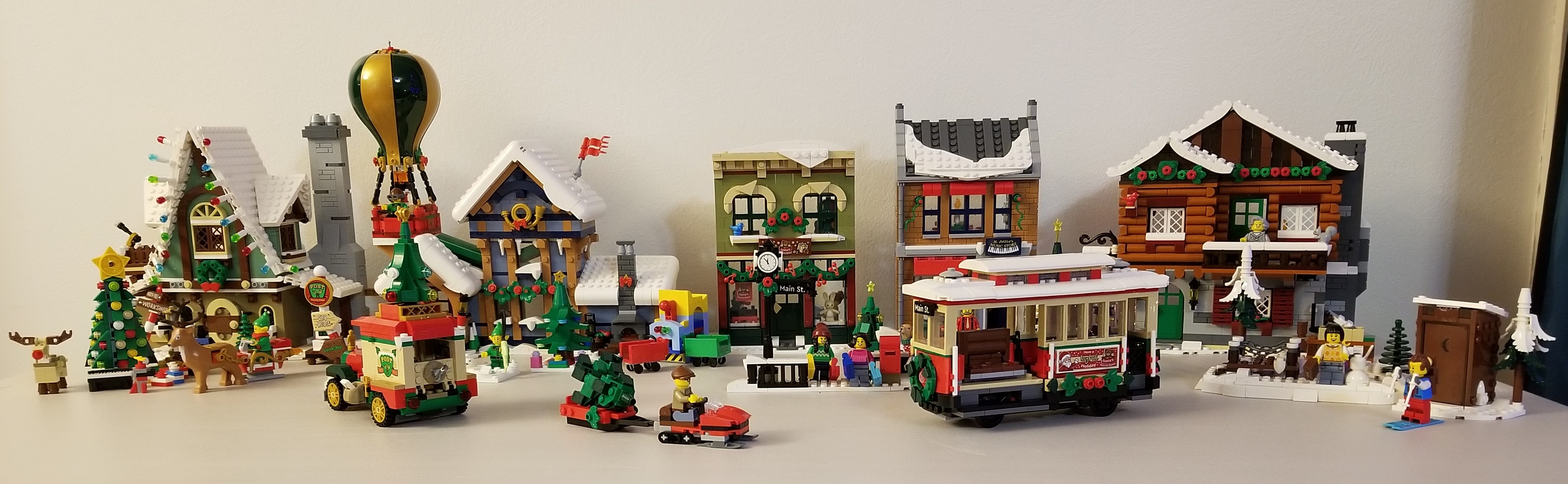
And recognize that it does take a village so thanks for being part of ours (even if it’s building Legos together to create the ideal village)! I love you all and I send you a big kiss. Happy Holidays!

LIFE IS AN EDUCATION-Reflections from School in the 1960s-Wonders of Math-Part III

Memories of my junior high years were of math and socialization in the dating scene. Although I was not allowed to date until high school, I rationalized to myself that it was a silly ritual and why couldn’t we all just be friends and work together for the common goals – learning and changing the world! Madame Curie was my hero back then. The search for the perfect method interested me more than boys. I wouldn’t discover what that was all about until my senior year.

The earliest memories I have of classroom experiences in math and science were in my primary years. We used a lot of what’s now called math manipulatives in first through third grade, but students called them building blocks, straws, puzzles, and other manipulatives. I knew that I enjoyed math, but I hadn’t made any connections to the real-world problems. I still wasn’t sure what it was all about and why we had to do it. My first through third grade teachers always said that I performed well in all subjects, according to my old report cards. I have little recollection of junior high other than the girlfriend’s discovering boys before I did, and band practice. What was studied during this time was a mystery. You blank out your puberty years because you don’t want to remember them.

Magically, I would soon discover the wonders of Algebra, around seventh grade that put me in love with math and the problem-solving adventures once again! I would go inside my head and forget about the torture of the boy scene. I also loved language and took two years of French. Foreign languages came easy for me. I had a great teacher who took a trip to France one summer and brought back gifts for her favorite students. She also turned us on to pen pals and I corresponded with a French girl my age for years.

Algebra, Geometry, Trigonometry, and even some pre-Calculus classes were the new world that I discovered, and they were like translating a foreign language. We had a trigonometry teacher who had worked on the Manhattan Project in her college years! I continued to enjoy mathematics until my senior year. By that time, my test anxiety had increased tremendously over the high school years, and this anxiety was reflected the most in this advanced math class. During this time, we students were also given lots of achievement tests. Reflecting on this, this was the first look for these teachers at some sort of standardized testing. America was realizing that they needed smarter students and standards for graduation. I never did very well on those tests. No preparation was ever given before these tests. We just had to get out of class and go take the test. I usually felt like a failure after this class. There was too much emphasis on standardized testing (because of lots and lots of money to be made by contractors). It has some benefits for the teachers, and the students get desensitized to these types of tests with proper preparation time and pre-testing.

It’s always hindsight that lets us know where our system has failed us. Although I still believe in the ideal of a balanced education, math and science must eventually be considered as equals in this education process, not greater or lesser. Businesses today are recognizing the importance of science and math education for their future employees. As a result, charter and magnate schools are cropping up everywhere with their sponsorship leaving behind public schools in terms of assistance and funding.

Overall, I lacked the problem-solving skills for the higher sciences and math. Even though I had excellent drill and practice skills, could remember lots of facts, got A’s in all the labs, and intuit lots of answers, I couldn’t get the “part in the middle” or how to show my work, except in my science classes. Those were pure poetry for me. Completing science projects and using the scientific method gave me a sense of accomplishment! I loved to journal, so this was a natural expansion of journaling.

Upon reflection, I feel that’s why I elected to major in psychology, then went on to law enforcement, and finally, crime analysis. I liked having some knowns and rules of the game, but I also liked the challenge of figuring out all the unknowns. Solving crimes, profiling criminals’ behavior, looking at patterns, as well as delinquency issues were puzzles that were exciting and challenging to me. It also gave directions to officers as to what to do with these guys, giving them an understanding that just locking up someone doesn’t always work. I had to prove my work through studies from the real people I constantly worked with. I was able to produce reports that validated my theories of behaviors and crime patterns, thus making predictions for future trends.

For me, this never appeared to be a math and science exercise, but a human nature puzzle. It was exciting work. It was wonderful to create something new or at least new at the time, and work with the experts in the field. Yet even though I was doing real world mathematics and scientific studies, I still had that feeling that I didn’t know it.

Perhaps, if I had been given the opportunity to learn about math and science in the way of the new methods teachers utilize today, I would feel more confident in my abilities. I would naturally assume that the classroom learning relates to the real-world experience. Perhaps today I would just assume the process was not an abstract concept. People do all kinds of math and science every day, in their jobs, in their work at home, and they do this mentally. Women just don’t believe it is math and science.

Perhaps if teachers in our day had approached subject matter as an inter-disciplinary approach, for all students, male or female, we would understand and enjoy all the subjects, even social studies. We would understand that there is math and science in every subject. There are many literature books that include math as part of the subject, woven into a beautiful story. It is as much as part of our lives as the liberal arts are. We don’t need to swing radically to absorbing only math-related subjects. And we should not swing radically in the other direction that excludes math-related information. Reading and literature must blend with math and science to create a so-called well-rounded education.

What I have learned in my experiences is that some teachers are excellent blenders of theory and hands on experiences. Some just know the drills. All front-line educators should be given the resources and time opportunities to combine fact learning with experiential learning. Students should work individually on projects and explore and expand the limits of individual thinking. Admittedly, cooperation is important in today’s societal norms and job market. Group activities can and should be successful learning experiences for all students. Not all students are strong in a group. Some are perfectly content to let others do the work, and we all know that a strong leader always emerges. There needs to be accountability in the group settings so that every individual participates and learns the lesson being taught. Individual creativity is crucial to individual growth, and individual growth leads to new discoveries and the development of new ways of thinking and doing.

Stay tuned for Part IV tomorrow-the final installation of this story!

Love and hugs to everyone who reads this blog and makes a small difference each day they live!

Note: Parts of this post were originally written for a graduate level class in the late 1990s. Some teaching methods have improved over the last two decades. I would love to hear teachers respond to this blog, how they help students learn, and what the new methods are to teach in an integrative learning environment. Thanks to all teachers who are dedicated to the craft in these trying times!


LIFE IS AN EDUCATION-Reflections from School in the 1960s-Part II

School in the 1960s was a combination of what we saw as ancient teachers who instructed our mothers and relatives – FACTS are FACTS! – and an introduction to innovative ideas from a student teacher who came out of the university for a semester. The old-school teachers taught facts and memorization. The exciting new teachers had a broader base in mathematics and science. Although we had some wonderful literature and art teachers in our midst, the math and science teachers were lacking.

There were no computers or calculators. All the calculations had to be done by hand. We still had slide rules in science! The early calculators were large and expensive and most of the rural areas didn’t have the equipment. I finally bought my first calculator which only did basic computations in my second year in college. It was a Texas Instruments SR10 which cost over $100.00 (a lot of money for me when you considered I made $2.50 an hour at my part-time job and gasoline was $1.00 a gallon)!

Since my primary education years, the drill and practice routine continued through high school. While I think some of these exercises are important, math and science must be as exciting to the student as the arts were in those days.

My curious nature kept me excited about all subjects, so I embraced and loved the research side of things, especially after high school. I competed in the local and state science fairs for two years in high school. The trip to the State Science Fair was great because you got out of school for the week! Although I never won first prize, I placed third in my area for my project, Crystals and Crystallization, and got to meet all the kids who were just like me! It was an exciting time. Years later, when I saw the movie October Sky, I would remember the feelings Homer had in participating in science in the making! Those were my people.

Years ago, I talked to my mother a lot about my dreams and read the things she had collected over the years. I read voraciously and would live in the library if I could. In one of my primary report cards, my mother commented that I would always bring my books home and read them to all members of my immediate family and my mother’s sisters who lived on the same road. Each time I went to the library and checked out a book, I would run up the road and read it to the aunts. They were my mentors during those primary years.

I was also in the band (since fifth grade) and played the clarinet. We had a small orchestra and performed concerts each year during Christmas and at the end of the year. Thinking back to those days, I was simply good at reading music and had rhythm. I don’t know if I could have gone on and created musical compositions or studied music as my lifetime achievement. But today, I have attended concerts put on by the middle school, high school, university, or even to the Denver symphony and relived those blissful memories in the performances these amazing people can give to us. My appreciation for music is the same even if I lapsed in my own practice.

In the Deep South (in my day), things move a little slower, unless you are living in a major metropolitan city. In my neck of the woods, I was a small child in a large world. I lived out in the country, far away from even the small cities, where my girlfriends lived. If I wanted to go anywhere for parties, I had to beg for rides from them or someone who could drive. This became disconcerting when I had dedicated events at school. It was up to me to get there most of the time.

I remember that I really disliked social studies and history – these classes were simply a lot of fill in the blanks. The athletic coaches usually taught these classes, and they weren’t always the best choice for these subjects. There was no excitement in learning about dates and battles and learning facts for tests. I didn’t get great grades in those junior high years (but who does?). I wanted more and would not revisit these subjects with any interest until my senior/adult years. (My husband says I am like every old man talking about books from the world wars. It is one of my current fascinations, and it is not just about the dates! But, more on that later!)

What I do remember of my junior high years was that it was a period of awkwardness and socialization. When the hormones kick in, the brain functions on a totally different level! Our parents were not as prepared to deal with these subjects, and we believed that they never really understood what we were going through.

Today, these feelings are still there. Children are just going through them in a very loud and public way. They turn to the media because sometimes parents just don’t know how to listen to them. They become more isolated because of this same media and their lack of social skills. They believe the media presence instead of the adult. Most parents have been given a certain societal mold by their parents of what their children should conform to. Realistically, parents must change their thoughts and learn to accept what is put in front of them and what their child is becoming. However, having said all of that, I do think parents should also be given a little more credit than what we gave our parents. They are more informed today due to that same media and open discussions. So, this cranky old one would like to give you young people some advice. We sometimes have more knowledge about these subjects than you give us credit for! It’s okay to listen to us about some things that are important to you.

It is my hope that we recognize what teenagers are going through today and have open and honest conversations about who they are inside. Acceptance is hard if your child is different than the norm. It takes time, but you can do it if you are open-minded and don’t let your past cloud your judgement. So read, learn, and talk about these subjects before they leave the nest. I send love out to the universe and hope you can all reach the stars!

-Stay tuned about socialization and more on math in Part III!

LIFE IS AN EDUCATION-Reflections from School in the 1960s-Part I

I think it’s important to expand a little more about my school years and the importance of community, the current events of the time, and of math and science. I grew up in a tumultuous time in this rural county in the south. My pre-college school years were from 1961-1972. It was a time of discovery and baby steps into space. It was a time of transformation from the man-centeredness or anthropocentricity (as Edward Abbey called it in his book, Desert Solitaire). Abbey was right when he advocated that the world did not exist solely for the sake of humankind. The two key events that expanded this opinion into depths we had never seen before were the race riots and space exploration. Our civilization was changing whether we liked it or not.

At first, my small rural community didn’t experience as much racial tension as was occurring in the larger schools such as Atlanta, Savannah, Macon, and in the bigger cities in the mid-west and up north. However, the general opinion among most adults and many of their children was zero tolerance for differing opinions among the races and the sexes. Most people in positions of power would have preferred that we remain as we had for the past two hundred years, since the inception of the colonial states.

Some of the earliest horrible memories of high school were listening to the male students in high school trying to impress me with their tales of chasing down Black men and hurting them. They followed their parents’ lead and would chase these Black students into the woods, in the middle of the night, and unceasingly beat them – sometimes beating them to death – with sticks and chains. We were afraid to speak up in case we got burned out. We saw it on the TV, the burning of churches and crosses.There were talks of hanging these same men in front of their families. Those were the memories that stick out of my early education years, and the people I grew up with.

I had vastly different opinions about who was a part of our community. I believed back then and still believe today that everyone should be treated equally and fairly. Thus, the few friends I had in elementary school dwindled to a minimum, since I didn’t believe in what they did.

My school was the only school in my small rural county. Since it was one school for the whole county, one simply moved up the hall to high school. There were two schools, one for people of color, and one for whites. We didn’t see complete integration until 1971, my junior year in high school.

I suppose I could say I was a crusader, an early civil rights activist, in the south for rights of all people – especially women, people of color and anyone who the southern white male felt was inferior to them. I wasn’t a physical demonstration-type of person, but I continued to write about it in my high school reports as well as to the local paper about what was going on in the world and how we should just Wake Up!

It’s hard to believe how far we still must go and how racism and women’s rights have vanished vigorously in these past few years. I have believed in women’s rights since my birth, but I didn’t like the harshness of the feminist movement. You cannot hate the entire male race for what they believe. Unfortunately, that’s the way they grew up and so many women bowed to that way of thinking. We made some changes, and now it seems to be reversing. I still believe that everyone must learn by doing. I felt that if you did an exceptionally excellent job, didn’t do inappropriate things with men to climb your way up the ladder and expect respect as a result (this was a popular at the time to get promotions through side benefits), that you could do anything. I did learn that from my naivete, I didn’t get as many promotions, but I tried to stay on the path and do the best job I could in the circumstances presented to us. I had to come home and respect me no matter what others said.

I always kept that idealistic belief of how the world should really be in my mind throughout all the struggling times. I continue to work towards that ideal today. We must get beyond that deep-seated prejudice that will rise up inside us when we are afraid. We are ready to unite in one cause to keep our loved ones safe, our fellow human beings alive, our environment clean, and reach for the stars.

We must help everyone, no matter their race or who they represent. We should unite in one cause to keep our loved ones safe, our environment clean, and reach for the stars.

To be continued tomorrow……

I love you all and want you to be happy! Hugs and Kisses!